


The mirror that was distorted
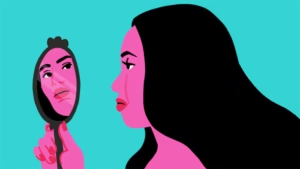
We have entered a world where the face of reality is hidden under the filter. Posts of shinning faces, snap chat smiles, Instagram posts and Facebook successes are a mirror of an artificial world. These “filtered facts” not only deceive our eyes, but also slowly change the mind. Social media platforms like Tik Tok, Facebook, Instagram, Snap chat allow people to present their curated versions of themselves. But behind every perfect post lies growing number of problems like distorted self-perception and declining self-worth.
“Comparison is a thief of joy and social media has turned it into a daily habit.”
The Rise of Filtered Self
The rise of filtered self is a reflection of the manner of the internal concepts of human beings to present themselves and others. In psychological terms we call this concept “Self-discrepancy Theory,” which states that if the gap increases between people’s “actual self” (which they are in fact) and “ideal self” (which they want to be) so is the increase in negative emotions, such as depression, anxiety, distorted self-perception, low self-esteem and deprivation. An American study based on this theory has proven that people who present a complete picture on social media and readily use beauty filters are high in actual-ideal discrepancies and so are more likely to report low self-esteem and higher levels of body dissatisfaction. And to reduce this cognitive dissonance people present themselves as a “smart product”. The perfect personality we try to turn ourselves into is actually a response to our internal dissolution, which reflects the pressure in the economic and psychological world.
The Cycle of Comparison
The world of social media actually operates on the comparison and approval system – in the form of likes, comments, and followers. People often compare the ordinary moments of their daily life with the shiny and selected posts of others. This phenomenon, called the “Upward Social Comparison”, increases jealousy, self -doubt, and physical or mental dissatisfaction.
According to the recent evidence (2024), a meta analytical research published in Journal of Cyber psychology, Behavior, and Social Networking makes it clear that the habit of comparing social media significantly reduces self -esteem and increasing symptoms of depression especially in young adults. Thus, the comparison of this nature makes a person feel internally empty and inadequate, though he himself has become part of the same unrealistic scale.
Mental health implications
In the era of social media, where every image, video and post is filtered beautifully, the mental health of a person accepts a profound effect. There are several prominent aspects that directly affect the individual’s sense, physical impression, and emotional stability.
Body image distortion
When a person repeatedly sees modified faces and bodies which are made unrealistic through filters, editing apps or lighting, his brain distorts the concept of “normal” or “natural”. According to American studies (APA, 2023), both young girls and boys begin to become more dissatisfied with their physical appearance when they see the “ideal” body on social media. This constant comparison reduces self -esteem and relieves the physical impression.
Self-objectification
Social media has turned humans into a “project” or “product”. Individuals begin to test themselves on the basis of appearance rather than character, abilities or moral attributes. This phenomenon is especially found in women, where self -value is linked to beauty or online popularity. According to research published in the Journal of Social and Personal Relationships (2022), people who guide more through their photos, feel more unsafe and more dependent on the opinions of others.
Anxiety and depression
In the world of social media, “likes” and “comments” have become a psychological prize. When this prize is low, the person becomes suffering from mental stress, anxiety and feeling. Numerous American studies (Twin et al., 2023) showed that young people who use social media for more than three hours a day, have significantly more symptoms of depression and social anxiety. Thus, the demand for online approval is converted into an emotional dependence.
Imposter syndrome
On social media, people are often under pressure to show happiness, success and exemplary life, even if the truth is in opposition to it. This demonstration leads to “imposter syndrome” – a feeling that a person appears to be successful but considers himself a failure and counterfeit role from the inside. According to American psychologist Pauline Clance, such people are always trying to prove themselves “quite good”, which produces long -term mental fatigue and dishonesty.
Thus, beauty has no longer a natural donation, but a gift of digital filter
These mental effects hidden behind the brightness of social media are a serious fact. While living in the “Filtered” world, man is not only turning away from his original identity, but he is also losing a sense of internal peace and self -sufficiency. Real balance is possible only when we learn to value our psychological reality more than outward pictures.
Cultural & Gender Perspectives
In South Asia, such as Collectivist Cultures, where the identity of the individual is often connected to family, tradition and social standards, the process of presenting itself in the online world has turned into a complex psychological pressure. On social media, “online approval” or “validation” is not just a matter of personal self -esteem, but it is linked to family expectations, honor, and social popularity. People create their posts, photos, and online attitudes on the basis of how others especially relatives, friends or communities will see them. In this way, social media becomes a mirror of not only individual identity but also collective values, which create a clear contradiction between the real and the ideal itself.
Pressure for Women: Beauty and perfection network
Specific standards of beauty, femininity and politeness have been imposed on women for centuries. Social media filters and editing tools have increased these expectations. Women often use filters to make their images “beautiful” or “perfect”, so that they can meet social standards. This pressure results in a psychological contradiction – apparently self -reliance and constant comparisons behind the expression of self -esteem. According to a study conducted in the United States in 2023, “Beauty Ideal Exposure” on social media is becoming a major cause of physical dissatisfaction and anxiety among women.
The “Alpha Male” deception for men
On the other hand, men have a different but equally powerful pressure to become “Alpha Male”. In online culture, demonstrations of power, dominance, and success have become the standard of masculinity. On social media, muscular physique, luxurious lifestyle, and assertive personality are presented as a symbol of masculinity, which many young men begin to pursue an unrealistic standard. This pressure often causes them anxiety, self -doubt, and emotional fatigue, as in real life they are unable to adapt themselves to these ideal images.
Identity collisions and mental fatigue
Thus, whether a woman or a man, both social media filtered ideas and gender expectations are constantly in a mental trap where the war between “What I am” and “I should be continued.” This internal collision gives rise to emotional fatigue, low self -esteem and stress in relationships over time. Although social media has opened new doors of expression, its filmed ideas have blurred our true identity – and this is the root of the quiet but dangerous mental exhaustion of the modern era.
The paradox of connection
Social media is apparently the means of bringing us closer to each other – people sitting in different corners of the world are just a click away. But surprisingly, this platform is increasing the feeling of isolation, emotional emptiness and isolation in humans. In today’s era, online presence is common, but being present by the heart is becoming rare. People do not view themselves “seen” unless their posts are liked or commented. Friendship, which was ever based on feeling, understanding and proximity, has now become a performance-based friendship where a human being gets approval from others by showing his happiness, success or beauty. In this race, emotional authenticity loses and relationships only become matter of exchanged pictures and words.
According to a recent study, people who spend more time on social media daily feel less connected, more alone, and emotionally dissatisfied in real life – no matter how high their online followers are. This is a modern contradiction: “The more we connect, the more we feel lonely.”
As American Psychologist Sherry Turkle says in his book Alone Together: “Technology promises connection, but it delivers isolation.”
Thus, this relationship contradiction of social media reminds us that the actual value of contact is not in quantity but in quality. Unless we learn to listen, understand, and realize each other, our “connected world” will actually remain a room of silent isolation.
Towards digital Self-Acceptance
In this era of social media, where every image seems to be filtered and every passion, the self-action has become a revolutionary process. We need to re -connect with our true identity, get back mental comfort, and keep a healthy distance from the online world. This is not just digital detox but a psychological balance. The following are some practical strategies that can be helpful in this direction:
1. Digital Detox Day: Taking a full break from social media at least one day a week helps re-balance the mind, restore creativity and re -connect itself. Research has shown that daily screen time reduction improves sleep, mood, and self -esteem.
2. Following positive and real content: Follow accounts that promote body neutrality, self-compassion and mental health. When our feed is full of realistic and balanced images, our mind is also free from unrealistic comparative pressure.
3. Mindful posting: Asking yourself every time you post something: “Am I sharing this or the performance?” – That is, am I sharing my truth or just trying to get approval? This simple question illustrates your intention and makes you more honest with your digital identity.
4. Therapeutic interventions: Cognitive Behavior Therapy (CBT) and Mindfulness techniques are very effective in restoring the true value of self. These methods teach man the skill of recognizing his thoughts and self -critical attitudes and turning them into a positive way.
5. Education and awareness campaigns: Schools, universities and workplaces should launch a healthy awareness programs on social media. When young and professionals are trained in digital balance, they can establish more stable, peaceful and self -reliant online identity.
Digital self -sufficiency does not mean withdrawal from social media, but to establish a conscious relationship with it. When we accept our “real self -self” beyond our “filtered self -styled”, not only does mental comfort increase, but we are able to live a truer, balanced and meaningful digital life.

