Introduction
In today’s digital age, Tik Tok, Instagram Reels, and YouTube Shorts dominate the online engagement of youth and adults. Short-form videos, which are only 15 to 60 seconds long, provide instant entertainment, emotional response and instant gratification. Their fast-paced nature is having a profound impact on human attention spans especially among the youth, who often spend several hours a day on these platforms.
Being exposed to constant dopamine driven content conditions the brain for fast and small rewards, reducing the ability for traditional learning, reading, and deep focus. This phenomenon has become a concern for educators, parents, and psychologists around the world. Let’s delve deep into psychology behind such doom scrolling.
The psychology behind TikTok’s design
Infinite Scroll & Algorithmic Precision
TikTok’s “For You Page” uses an AI-driven recommendation system that learns a user’s micro-preferences – tracks likes, watch time, pause behavior, and repeat views. In this way, the platform makes the content highly personalized for each user. Due to auto-play and infinite scroll, users continue to watch videos without stopping, which makes binge-watching a habit. Young people often report that they only open the app for “5 minutes,” but are unable to leave after several hours.
The Dopamine Loops
Every new video produces a small spike of dopamine in the brain, which gives a feeling of instant happiness and reward. Over time, the brain becomes accustomed to quick hits, and slow-paced or less stimulating content feels boring. This is the reason why young people quickly become frustrated or distracted. When they read a book or listen to a long lecture.
Variable Reward System
Every swipe of TikTok is a kind of gamble. You don’t know if the next video will be hilarious, emotional, shocking or inspiring. This uncertainty keeps the brain addicted, just like slot machines.
According to research, variable ratio reward systems are the most addictive, because the brain is ready to release dopamine every time a new video (sciencedirect.com).
What Is Happening to Attention Span?
Micro-attention versus deep focus.
Continuous exposure to short-form content reshapes the brain according to 5-20 seconds of micro-focus. Young people and adults now find it difficult to engage in long reading, studying or focused work. Traditional deep focus tasks, such as reading a book, writing assignments, or listening to a lecture, seem “boring” and the brain becomes distracted in search of immediate rewards.
Cognitive overload
Rapid topic switching in short-form content puts a load on the brain’s working memory. Constant new stimuli increase mental fatigue, weaken decision-making ability, and affect problem-solving skills. Youngsters often feel that they are mentally exhausted and distracted even after completing long tasks.
High-speed, colorful, and emotionally charged snippets get the brain used to being constantly stimulated. Ordinary moments of real life class, gaming or reading, feel boring, which increases restlessness and boredom. This pattern of overstimulation can lead to attention deficit tendencies in young people.
The Impact on Children and Teens
Developing Brains Are More Vulnerable
The prefrontal cortex of young people is not yet fully developed, which is why self-regulation and impulse control are weak. Short-form content leads them to addictive patterns and reduces attention span. Research among young people in the US and UK shows that children who use TikTok more have less patience and more impulsivity (SSRN).
The effects of the classroom
Lack of attention in the classroom is a common problem. Students find traditional teaching methods, such as lectures or reading assignments boring and get distracted quickly. Teachers have also reported that children prefer TikTok-style fast paced learning.
Emotional regulation issues
Constant exposure to short-form videos reduces the frustration tolerance of young people. They want everything immediately, which increases irritability and restlessness. Studies show that type-age teenagers get angry or anxious quickly over small things, because their brain is accustomed to continuous instant reward (SpringerLink).
The Impact on Adults
Productivity Decline
The use of TikTok and other short-form platforms is also affecting the productivity of adults. They are unable to focus in meetings, get distracted early in completing reading or work tasks, and performance is impaired due to habitual multitasking.
Memory and Comprehension
Addicted to short-form content led the brain to process information fragmentarily, which weakens long-term retention. Adults often report that they can’t remember information they read or heard a few hours ago, because the brain is always accustomed to short, fragmented snippets.
An increased level of anxiety
Constant notifications and fragmented attention create a sense of mental stress and “mentally scattered” in adults. Adults often feel over-stimulated and restless, because the brain has become accustomed to high-speed, high-stimulation content.
Social and Behavioral Changes
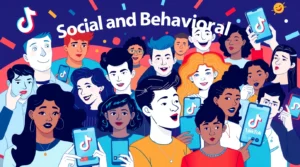
Preference for short, fast-paced communication
Short-form content has made people’s communication style short and fast. Young people have become impatient to listen to or read long explanations, which has affected patience and listening skills.
The Fun of Education
Algorithms prioritize pleasure-based and entertaining content, due to which young people consume only entertainment, leaving behind books, documentaries and meaningful conversations. These are detrimental to learning habits, critical thinking, and sustained focus.
The social dependency
Spend more time with young influencers. instead of family or friends. This one-sided emotional attachment affects social skills and mental wellbeing, and they often value online interactions more than real-world relationships.
Strategies to Protect and Rebuild Attention Span
The digital boundaries
Use screen-time limits and app timers to avoid overuse. This habit protects the brain from over-stimulation and helps to gradually rebuild the attention span.
The action of Dopamine Reset
Walking, journaling, reading, and mindfulness exercises reset the brain’s reward system. It helps to increase patience and patience.
The practice of deep work
Adopt the Pomodoro technique or single-tasking. Doing just one thing at a time strengthens the attention muscles and increases sustained focus.
The Slow Content Diet
Replace short-form videos with podcasts, documentaries, or long-form reading. They train the brain for patience, concentration, and deep focus.
For parents and teachers
Create screen-free zones and structured routines. Encourage hobbies such as art, sports, puzzles so that children and young people can get used to patience and delayed satisfaction.
“He who has mastered his mind has mastered the world.”
(Aristotle)